
Pre-Workout Massage vs Post-Event: When to Book It
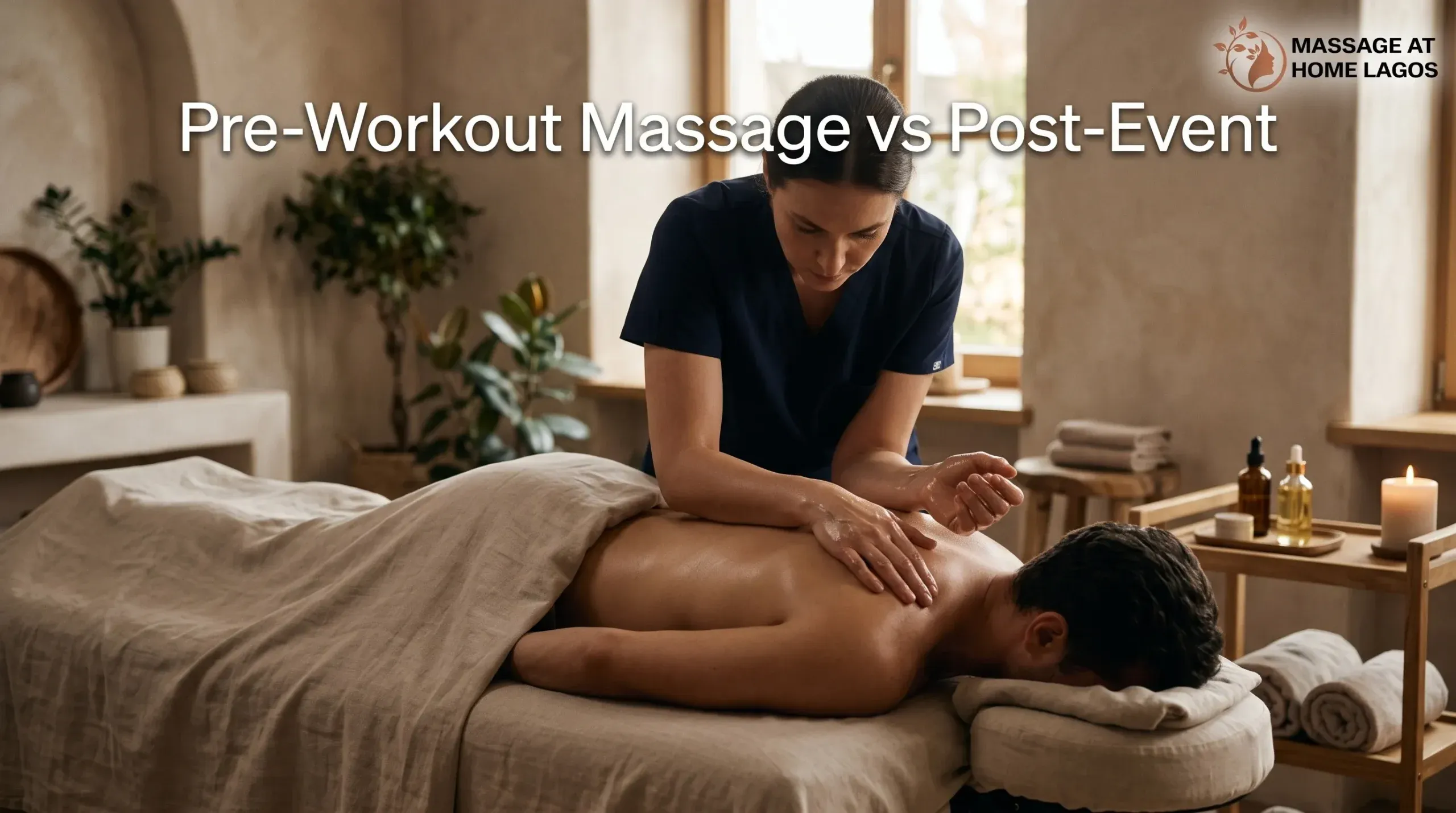
Quick answer: A pre-workout massage should be short and light, given shortly before you compete and after your warm-up. A post-event massage should be slower and more thorough, starting about 15 to 20 minutes after you finish and continuing for up to 72 hours.
Most athletes in the Algarve ask the same thing a day before a race or tee time: should I get a massage now, or wait until afterwards? The honest answer is both, but for different reasons. Timing changes what a massage does to your muscles. Get it wrong and you can leave your legs feeling flat on the start line.
What Does a Pre-Workout Massage Actually Do?
A pre-workout massage prepares your body to move. Think of it as an extension of your warm-up, not a relaxation session. The aim is to increase blood flow, free up joints and wake up the muscles you are about to use.
Therapists rely on quick, rhythmic techniques. Effleurage (light gliding strokes) warms the tissue. Tapotement (rapid tapping) stimulates it. Short bursts of friction and compression finish the job. One sports massage reference summarised in a physical therapy e-book suggests a pre-event protocol of just 5 to 10 minutes, built around brisk strokes, shaking, tapotement and dynamic movement.
The evidence is mixed, and it helps to say so. A review in Sports Medicine found that research on pre-exercise massage and performance is limited. It also noted that post-exercise massage reduces the severity of soreness without restoring lost muscle function. So expect a pre-workout massage to improve how you feel and move, not to add measurable power.
How Long Before Competition Should You Get a Sports Massage?
Guidance differs slightly by source. The Integrative Healthcare Institute suggests roughly 20 to 30 minutes before the event, after your warm-up. Other practitioners recommend 60 to 90 minutes. A sensible rule is to finish the session well before your start time and never skip your own warm-up.
For a day-before session, keep it light. A gentle pre-race massage the day before can ease travel stiffness and nerves without leaving muscles fatigued.
A simple pre-event timeline:
- 72 hours before: Book any deep or injury-focused work now, not later.
- 24 hours before: Choose a light, flowing session of 30 minutes or less.
- Event day: Have a brief, stimulating massage before you compete, followed by your normal warm-up.
Why Deep Tissue Massage Before a Race Can Backfire
Deep, slow pressure relaxes muscle. That is excellent on a rest day and unhelpful just before you sprint. In a study published in the Journal of Sports Science and Medicine, participants who received a 15-minute lower-limb Swedish massage after warming up performed worse on vertical jump, acceleration and reaction time tests. Flexibility improved, but speed dropped.
That is why you should avoid deep tissue massage before competition and save it for the days after. If you are unsure which style you need, our guide to classic massage vs deep tissue explains the difference in plain terms.
Post-Event Massage: What Happens and When
Post-event massage has the opposite job. It calms the nervous system, reduces tension and helps your body return to normal. Practitioners use longer strokes and petrissage (kneading) to loosen tight tissue, and gentle lymphatic work to help move fluid out of tired legs. The e-book summary mentioned above suggests 20 to 30 minutes for a post-event session.
Timing matters here too. Wait until your heart rate has settled and you have cooled down, usually 15 to 20 minutes. If you cannot book straight away, a session within six hours still helps, and a recovery massage 24 to 72 hours after the event is a good moment for deeper work once swelling has gone down.
For heavy legs after a long flight, a round of golf or a hot day on the trails, a circulation massage in Vilamoura uses the same long, flowing approach.
Does Massage Help With DOMS?
Yes, to a degree. Delayed onset muscle soreness (DOMS) usually peaks one to two days after hard exercise. Research indicates massage can lower how sore you feel, even though it does not restore strength faster. Combine it with water, food and sleep, and treat it as one part of recovery.
Pre-Event vs Post-Event Massage: Side-by-Side
| Factor | Pre-event massage | Post-event massage |
|---|---|---|
| Main goal | Stimulate and prepare muscles | Relax, restore and recover |
| Best timing | 20 to 90 minutes before, after warm-up | 15 to 20 minutes after, up to 72 hours |
| Length | 5 to 15 minutes | 20 to 60 minutes |
| Pressure | Light to moderate | Moderate, deeper after 24 hours |
| Key techniques | Effleurage, tapotement, friction | Petrissage, lymphatic work, gentle stretching |
| Avoid | Deep tissue, long sessions | Heavy pressure on inflamed or swollen areas |
A Practical Recovery Plan for Algarve Athletes
The Algarve gives athletes plenty to train on, from the golf courses around Quinta do Lago, Vale do Lobo and Vilamoura to the cliff paths of the Seven Hanging Valleys, the Fishermen’s Trail and the Via Algarviana. Distances are short, but heat and uneven ground are hard on the legs.
A realistic plan for a golf or trail trip looks like this:
- Before the round or run: a short, light session at your villa, ideally timed before your warm-up.
- Straight after: cool down, drink, eat and rest.
- Same evening or next day: a longer recovery session to ease stiffness.
- Two to three days later: deeper work on any area that still feels tight.
A mobile therapist makes this much easier, because you never have to drive when you are tired. Our sports massage service comes to your villa, hotel or resort. We cover areas including Vilamoura, Vale do Lobo and Almancil, and we are open daily from 9:00 until 23:45, so early pre-race slots and late recovery sessions are both possible.
Quick Answers to Common Questions
Is a light massage the day before a race okay?
Yes. Keep it under 30 minutes and avoid deep pressure.
How soon after a competition can I get a deep recovery massage?
Gentle work can start within hours. Save deep pressure for 24 to 72 hours later.
Does a pre-event massage improve performance?
The research is limited. Its clearest benefits are feeling looser and more prepared, not extra speed or power.
Can a massage therapist come to my resort in Faro?
Yes. A mobile therapist brings the table and equipment, so you can book sessions around your event.
Book Your Timing, Not Just a Treatment
If you have an event coming up, plan your massages around it. Tell us your sport, event time and any sore spots, and we will recommend the right window and pressure. Choose a time on our appointment page, compare packages and special offers, or message us on WhatsApp to claim our seasonal offer of up to 15% off. Slots near race weekends fill quickly, so booking early gives you the best choice of times.