
Deep Tissue vs Swedish Massage: Which One Do You Need?
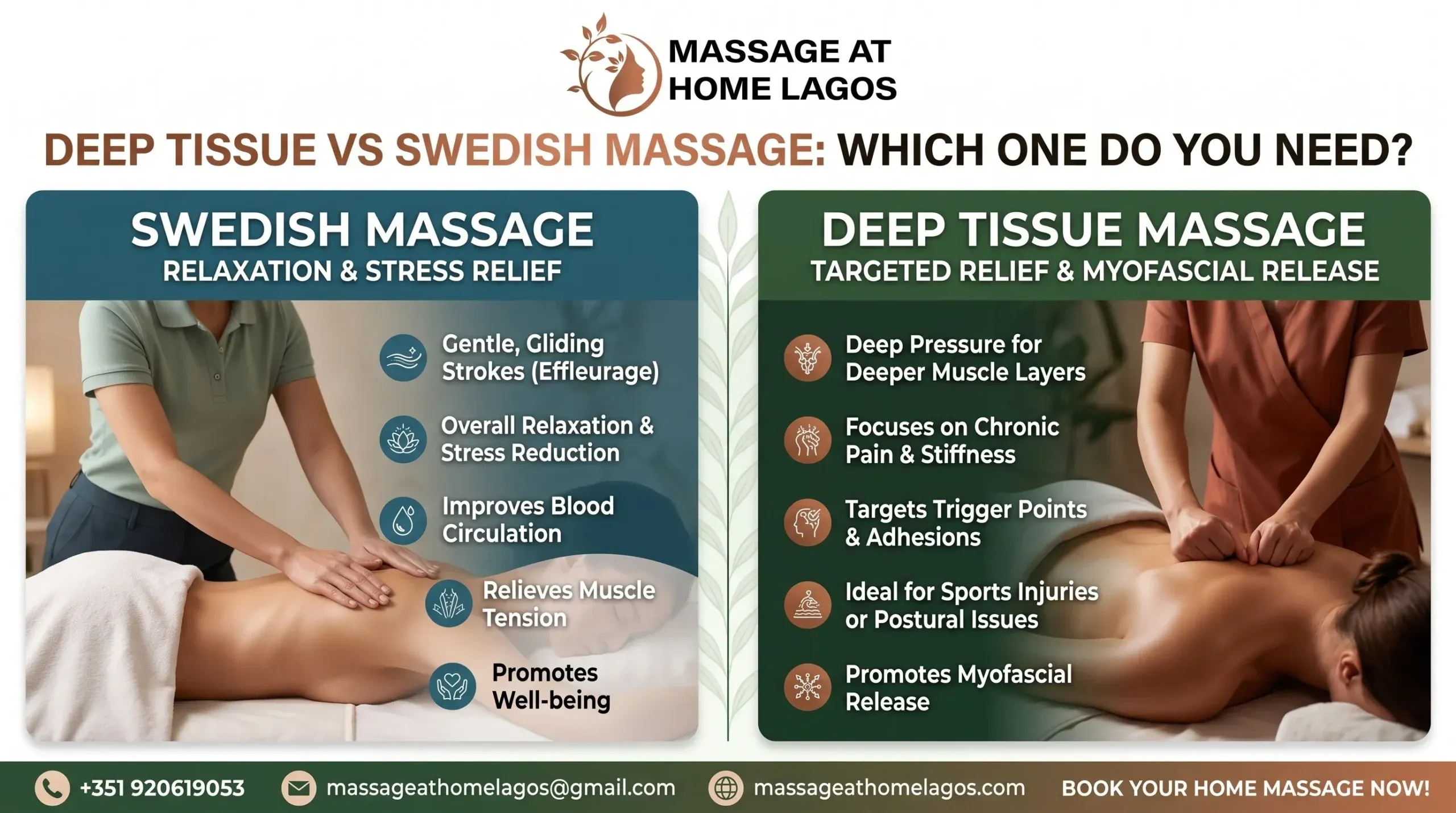
If your shoulders have been carrying more tension than your suitcase, you’ve probably typed some version of “deep tissue vs Swedish massage” into Google and found a dozen articles that all say roughly the same thing. Here’s what most of them leave out: the right choice depends less on which massage sounds more impressive and more on what your body is actually asking for. This guide breaks down what deep tissue massage is, who it’s genuinely suited for, how it compares to Swedish massage, and what to expect if you book one in the Algarve — whether that’s at a hotel spa, a private villa, or your own living room.
What Is Deep Tissue Massage?
Deep tissue massage is a therapeutic technique that targets the deeper layers of muscle and connective tissue, rather than just the surface muscles a relaxation massage works on. A trained therapist uses slow, deliberate strokes and sustained pressure, often with the elbow, forearm, or knuckles, to release chronic tightness, break down adhesions, and ease muscle knots that have built up over weeks or months.
Unlike a purely relaxation-focused session, deep tissue work has a specific job to do. It’s therapeutic first and pampering second, which is exactly why it appeals to people managing chronic pain, physical strain, or the after-effects of an intense week rather than those simply looking to unwind.
What Is Swedish Massage, for Comparison?
Swedish massage is the classic, full-body relaxation treatment most people picture when they think of “a massage.” It uses long gliding strokes, gentle kneading, and lighter pressure across the topmost muscle layer to improve circulation and calm the nervous system. It’s rarely uncomfortable, and it’s the better starting point if you’re new to massage therapy or simply want to de-stress rather than treat a specific problem.
Deep Tissue vs Swedish Massage: The Key Differences
| Factor | Swedish Massage | Deep Tissue Massage |
|---|---|---|
| Pressure | Light to moderate | Firm, targeted, sustained |
| Main goal | Relaxation, stress relief | Pain relief, muscle recovery |
| Technique | Long gliding strokes | Slow strokes, friction, trigger point work |
| Best for | First-timers, general tension | Chronic pain, athletes, postural issues |
| Sensation | Soothing throughout | May feel intense in tight areas |
| Aftereffects | Usually none | Mild soreness possible for a day |
The difference isn’t about which is “better.” It’s about which matches your goal for that session.
Who Is Deep Tissue Massage For?
Deep tissue massage tends to suit people who fall into one of a few groups:
- Chronic pain sufferers dealing with lower back pain, neck and shoulder tension, or sciatica-related discomfort
- Athletes and active people recovering from training, hiking, or golf, who need muscle recovery rather than pure relaxation
- Desk workers with postural tension from long hours sitting, especially neck and upper back tightness
- Travelers managing stiffness after a long-haul flight or drive
- Anyone with muscle knots or adhesions built up from stress, old injuries, or repetitive movement
If you spent the morning on the Seven Hanging Valleys Trail or a round at one of the Algarve’s golf courses, a deep tissue session afterward is doing real physiological work, not just indulgence. Guests staying near Vilamoura often book one specifically as golf recovery treatment rather than a spa add-on.
What to Expect During a Deep Tissue Massage
Is deep tissue massage painful? Not if it’s done well. You should feel firm, deliberate pressure and occasional discomfort as the therapist works through a tight spot, but it should never cross into sharp pain. Clear communication with your therapist about pressure levels throughout the session is the difference between a productive treatment and an unpleasant one.
A typical session looks like this:
- A short consultation about problem areas, pain history, and pressure preference
- Warm-up strokes to prepare the muscles, similar to lighter Swedish technique
- Targeted deep pressure on specific muscle groups using elbows, forearms, or thumbs
- Slower work on identified knots, holding pressure until the tissue releases
- A gentler finish to calm the nervous system before you get up
Mild soreness for 24 to 48 hours afterward is normal and comparable to how muscles feel after a good workout. Drinking water and light stretching help it pass faster.
Health Conditions Deep Tissue Massage Can Help With
People commonly book deep tissue massage for lower back pain, sciatica-related tension, fibromyalgia-related stiffness, plantar fasciitis, and general chronic muscle tightness. The 2017 American College of Physicians guidelines listed massage as an option for treating acute and subacute low-back pain, and massage therapy has also been shown to offer short-term relief for neck and shoulder pain, according to the U.S. National Center for Complementary and Integrative Health. It’s not a cure-all, but it’s a genuinely evidence-backed part of a broader pain management approach, not just a wellness trend.
Deep Tissue vs Sports Massage vs Myofascial Release
These three get confused constantly. Deep tissue massage works broadly through the deeper muscle layers for general chronic tension. Sports massage is similar in pressure but built around athletic performance and injury prevention, often with more stretching involved. Myofascial release focuses specifically on the connective tissue, or fascia, using sustained, lighter pressure rather than deep strokes. In practice, an experienced therapist will often blend techniques based on what your muscles actually need that day.
How Often Should You Get a Deep Tissue Massage?
For chronic tension or ongoing pain management, once every two to four weeks is a common starting point. Athletes in a heavy training block sometimes book weekly sessions, while someone managing occasional stiffness might only need one every couple of months. Your therapist can help you settle on a rhythm after the first session or two.
Risks and Who Should Be Cautious
Deep tissue massage isn’t right for everyone. People with blood clotting disorders, certain skin conditions, recent surgery, uncontrolled high blood pressure, or who are pregnant should check with a doctor first, and always tell your therapist about any medical conditions before the session starts. Mild bruising or soreness afterward is possible but should be discussed with your therapist if it feels excessive.
Deep Tissue Massage in the Algarve: Mobile and In-Villa Options
If you’re staying anywhere from Faro to Lagos, deep tissue massage doesn’t have to mean a hotel spa booking. Massage at Home brings certified deep tissue therapy directly to your villa, hotel room, or rental across the Faro District, including Lagos, Albufeira, Portimão, and Faro town itself. It’s a popular choice for golf trips, post-flight recovery, or couples wanting a relaxed, private session without leaving their accommodation. You can browse current seasonal massage packages, check frequently asked questions, or read more comparisons and wellness guides on the Massage at Home blog.
Frequently Asked Questions
What is deep tissue massage and who is it for?
It’s a therapeutic massage targeting deep muscle and connective tissue, best suited to people with chronic pain, athletes, and anyone recovering from physical strain.
What’s the main difference between deep tissue and Swedish massage?
Pressure and purpose — Swedish is gentle and relaxation-focused, deep tissue is firm and therapeutically targeted.
Should I book deep tissue massage after golf or a long flight?
Yes, it’s commonly used for exactly this kind of muscle recovery and travel-related stiffness.
Ready to book? You can schedule an appointment online or message the team directly on WhatsApp — mention the current 15% seasonal offer when you reach out.